Dinesh

सरस्वती पुजा

सरस्वती प्रार्थना मन्त्र

सरस्वती माया दृष्टा वीणापुस्तकधारिणी।
हंसवाहनसंयुक्ता विद्यादानं करोतु मे॥१।।

प्रथमं भारती नाम द्वितीयं च सरस्वती।
तृतीयं शारदा देवी चतुर्थं हंसवाहिनी॥२।।

पञ्चमं तु जगन्माता षष्ठं वागीश्वरी तथा।
सप्तमं चैव कौमारी चा‌‌‍‍‍‌ऽष्टमं वरदायिनी॥३।।‌‍‌‌

नवमं बुद्धिदात्री च दशमं ब्रह्मचारणी।
एकादशं चन्द्रघण्टा द्वादशं भुवनेश्वरी॥४।।

द्वादशैतानि नामानि त्रिसन्ध्यं यः पठेन् नरः।
जिह्वाग्रे वसते तस्य ब्रह्मरूपा सरस्वती॥५।।

सरस्वती वन्दना

या कुन्देन्दुतुषारहारधवला या शुभ्रवस्त्रावृता।
या वीणावरदण्डमण्डितकरा या श्वेतपद्मासना ॥
या ब्रह्माच्युत शंकरप्रभृतिभिर्देवैः सदा वन्दिता ।
सा मां पातु सरस्वती भगवती निःशेषजाड्यापहा ॥१।।

शुक्लां ब्रह्मविचार सार परमामाद्यां जगद्व्यापिनीं ।
वीणा-पुस्तक-धारिणीमभयदां जाड्यांधकारपहाम् ।।
हस्ते स्फाटिकमालिकां विदधतीं पद्मासने संस्थिताम् ।
वन्दे तां परमेश्वरीं भगवतीं बुद्धिप्रदां शारदाम् ।।२।।

Posted by Dinesh, 2 comments

Success demands 8 things

  1. Hard work: Don’t believe in luck; believe in hard work.
  2. Patience: If you are losing the patience, then you are losing the battle.
  3. Sacrifice: If you don’t sacrifice for what you want, then what you want becomes the sacrifice.
  4. Consistency: Consistency is what transforms average into excellence.
  5. Discipline: Motivation gets you going, but discipline keeps you growing.
  6. Self-confidence: Confidence is not like they will like me. Confidence is, I’ll be fine if they don’t like me.
  7. Positive attitude: A positive attitude won’t solve all your problems, but it will annoy enough people to make it worth the effort.
  8. Focus on your goals, not on your obstacles: When you concentrate on what truly matters, the rest becomes irrelevant—allowing you to move forward with clarity and determination.

Posted by Dinesh, 0 comments

Success starts with a Goal

Goal without Deadline = Fantasy

Goal + Deadline = Objective

Goal + Deadline + Plan = Intention

Goal + Deadline + Plan + Consistent Action = Success

Meaningful Goals + Deadline + Plan + Consistent Action = Fulfillment

Posted by Dinesh, 0 comments

Eliminate procrastination

Eliminate procrastination because the cost of procrastination is the life you could’ve lived. We have listed a few tools/techniques to assist with this process.

  1. Use the ‘2-Minute Rule’
  • If a task can be done in less than 2 minutes, do It immediately.
  • This helps to eliminate small tasks that can quickly add up and make you feel overwhelmed.
  1. Use the “5-Second Rule”
  • When you feel the urge to procrastinate, count down from 5 and take immediate action.
  • Count backward 5-4-3-2-1.
  • This helps to overcome the initial resistance to starting a task.
  1. Use the “Pareto Principle”
  • Focus on the 20% of tasks that will produce 80% of the results.
  • This helps to prioritize tasks and avoid procrastination.
  1. Use the Pomodoro Technique
  • The Pomodoro Technique is a time management technique that involves working in focused 25-minute increments, followed by a 5-minute break.
  • After four cycles, take a longer break, 15-30 minutes.
  1. Try the 1-3-5 rule.
  • At the start of each day, identify 1 big to accomplish, 3 medium things, and 5 small tasks.
  • Knock out those priorities first.
  1. Break tasks into smaller pieces.
  • One of the main reasons we procrastinate is because a task seems too big and overwhelming.
  • To make it more manageable, try breaking it down into smaller, more doable parts.
  1. Identify your prime time.
  • Notice when you tend to be most focused and energetic, then dedicate that time to your highest priorities.
  • Save mindless tasks for your mental lulls.
  1. “Eat that frog”
  • Do your biggest, nastiest task first thing in the morning while your willpower is highest.
  • It’s energizing to get the hard stuff out of the way early.
  1. Create a To-Do List
  • Write down all the tasks you need to complete in a day.
  • Crossing off items as you finish them can give you a sense of accomplishment and keep you motivated.
Posted by Dinesh, 0 comments

सरस्वती वंदना

रवि-रुद्र-पितामह-विष्णु-नुतं, हरि-चन्दन-कुंकुम-पंक-युतम्!
मुनि-वृन्द-गजेन्द्र-समान-युतं, तव नौमि सरस्वति! पाद-युगम्॥1॥

शशि-शुद्ध-सुधा-हिम-धाम-युतं, शरदम्बर-बिम्ब-समान-करम्।
बहु-रत्न-मनोहर-कान्ति-युतं, तव नौमि सरस्वति! पाद-युगम्॥2॥

कनकाब्ज-विभूषित-भीति-युतं, भव-भाव-विभावित-भिन्न-पदम्।
प्रभु-चित्त-समाहित-साधु-पदं, तव नौमि सरस्वति! पाद-युगम्॥3॥

मति-हीन-जनाश्रय-पारमिदं, सकलागम-भाषित-भिन्न-पदम्।
परि-पूरित-विशवमनेक-भवं, तव नौमि सरस्वति! पाद-युगम्॥4॥

सुर-मौलि-मणि-द्युति-शुभ्र-करं, विषयादि-महा-भय-वर्ण-हरम्।
निज-कान्ति-विलायित-चन्द्र-शिवं, तव नौमि सरस्वति! पाद-युगम्॥5॥

भव-सागर-मज्जन-भीति-नुतं, प्रति-पादित-सन्तति-कारमिदम्।
विमलादिक-शुद्ध-विशुद्ध-पदं, तव नौमि सरस्वति! पाद-युगम्॥6॥

परिपूर्ण-मनोरथ-धाम-निधिं, परमार्थ-विचार-विवेक-विधिम्।
सुर-योषित-सेवित-पाद-तमं, तव नौमि सरस्वति! पाद-युगम्॥7॥

गुणनैक-कुल-स्थिति-भीति-पदं, गुण-गौरव-गर्वित-सत्य-पदम्।
कमलोदर-कोमल-पाद-तलं,तव नौमि सरस्वति! पाद-युगम्॥8॥

Posted by Dinesh, 0 comments

Checklist – do it right

In a world where life’s pace steadily increases, the quest for productivity has become an essential aim for many. Amidst hectic schedules and expanding task lists, striking a balance between effectiveness and personal well-being is a frequent challenge. Here, we offer insights into productivity, presenting an array of established and fresh strategies. It invites an exploration of approaches that facilitate smooth navigation through the everyday complexities of life, aiming to use time wisely and fostering a more orderly, attentive, and rewarding way of living.

1. Unload Your Mind.

Jot down every task, project, goal, and to-do that comes to mind.
This helps in reducing mental burden.

2. Categorize Tasks.

Narrow it down to 3-4 primary tasks for the day.
Employ the Eisenhower Matrix to classify tasks based on their urgency and importance:

Urgent and Important (UI)
Important but Not Urgent (nUI)
Urgent but Not Important (UnI)
Neither Urgent nor Important (nUnI)

3. Establish a Morning Routine.

Begin each day with a brief 5-15 minute routine.
For instance:

  • Drink water
  • Have breakfast
  • Do some stretching
  • Perform a plank exercise
  • Practice meditation

This assists in preparing your brain for a productive day.

4. Allocate Time Blocks.

Assign specific times for each task.
Work in 90-minute intervals followed by breaks.
Apply the Pomodoro Technique: 25 minutes of focused work with 5-minute breaks.

5. Link Tasks to Objectives.

For every task, contemplate its purpose.
Understanding the reason behind each task connects it to your overall goals.
Goals lead to motivation, which enhances productivity.

6. Avoid Overcrowding Your List.

Being busy doesn’t always equate to being productive.
Limit yourself to 3-5 major tasks and 1-2 minor tasks daily.
This approach helps to avoid burnout and maintains motivation.

7. Evaluate Your List Daily.

Reflect on the tasks you’ve completed at the end of each day.
Celebrate your accomplishments.
Consider what you didn’t achieve.
This evaluation improves the planning for the following day.

Productivity is more about focusing than the quantity of tasks.

Follow these strategies for a productive checklist:

  1. Unload your mind
  2. Categorize tasks
  3. Establish a morning routine
  4. Allocate time blocks
  5. Link tasks to objectives
  6. Avoid overcrowding your list
  7. Evaluate daily
Posted by Dinesh in Blog, 0 comments

Self help methods

Navigating life’s complexities requires both wisdom and practical tools. From managing finances effectively with the 50-30-20 rule to understanding the nuances of communication through the 7-38-55 principle, this list aims to provide a foundational understanding of various life strategies. It’s not just about learning theories but about applying them effectively in everyday scenarios. Whether it’s enhancing personal charisma, adopting a productive mindset, or learning from mistakes, the following list offers a blend of psychological insights and actionable advice tailored for us, those seeking to make informed decisions and improve our overall quality of life.

How to Budget (50-30-20 Rule)

Allocate your income to these buckets:

50% Needs (Housing, Food, Transportation, Basic utilities, Insurance)

30% Wants (Entertainment, Travel, Fashion/Gear)

20% Savings (Debt Payments, Emergency Fund, Retirement, Investments)

How to Boost Charisma (SHR Method)

Make people feel important:

Seen: Give eye contact. Offer a specific compliment

Heard: Ask good questions. Be interested, not interesting.

Remembered: Follow up. Remember name(s). Recall something you discussed.

How to Beat Perfectionism (70-20-10 Rule)

The #1 factor that influences creative success?

Volume produced.

Use 70-20-10 Rule:

  • 70% of your work will be mediocre
  • 20% will suck
  • 10% will be amazing

If you’re avoiding failure, you’re avoiding success.

How to Learn Anything (Feynman Technique)

Richard Feynman was a Nobel Prize-winning physicist.

His powerful 3-step learning technique:

Step 1: Choose & study a concept

Step 2: Teach it to a child

Step 3: Return to learning. Fill in knowledge gaps. Simplify further.

How to Give an Update (4-Bullet Status)

Powerful people are busy. (They might not remember what they asked you to do)

Use this outline:

  • Here’s what you asked me to do
  • Here’s what I did
  • Here are the risks/blockers (if any)
  • If given more time, I’d do this

How to Learn from Your Mistakes (After Action Review)

  1. What did I intend to accomplish?
  2. What happened?
  3. Why did it happen that way?
  4. What will I do next time for a better outcome (or to repeat my success)?

Learning from mistakes separates the best from the rest

How to Communicate Powerfully (7-38-55 Rule)

People will like/dislike your speaking based on the following:

  • 7% words
  • 38% tonality and face
  • 55% body language

Stand up straight, pull your shoulders back, make eye contact, smile, give a firm handshake…

You will be dangerous.

How to Be Productive (3-3-3 Plan)

Write down today’s 3-3-3 Plan:

  • 3 hours on your most important project
  • 3 shorter tasks
  • 3 maintenance activities

Defining a “Productive day” is crucial.

Or else you’ll never be at peace (even with excellent output).

Posted by Dinesh, 0 comments

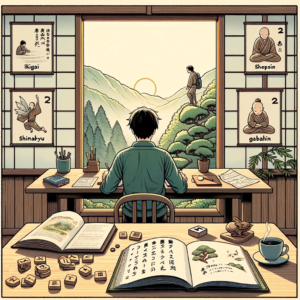
Useful Japanese techniques

Japanese techniques for personal and professional development are revered for their holistic approach to fostering balance, efficiency, and mindfulness. Rooted in centuries of tradition, these methods are not just tools to combat laziness but are also pivotal in enhancing overall well-being and productivity. As we explore techniques like Ikigai, Kaizen, and Shinrin-yoku, we uncover the profound impact they can have on our daily lives, guiding us towards a more fulfilled and purposeful existence. Here are some of these transformative techniques that can reshape the way we approach our personal and professional challenges.

1. Ikigai

It means to have a purpose in life. The reason you wake each working excited to do something. When you have a purpose, you won’t feel lazy or unmotivated

4 Rules of IKIGAI

  1. Do what you love,
  2. Do what you’re good at,
  3. Do what the world needs,
  4. Do what you can be paid for.

2. Kaizen

It means focusing on small improvements every day and not waiting for big improvements but trying to become 1% better every day. Instead of setting a big goal, we should divide it into multiple small goals and tackle each of them one by one.

3. Shoshin

It’s a concept from Zen Buddhism that means approaching things with a beginner’s mindset.

“If your mind is empty… It is open to everything. In the beginner’s mind, there are many possibilities, but in the expert’s mind, there are few.” – Shunryu Suzuki (author of Zen Mind, Beginner’s mind)

4. Hara Hachi Bu

This means to stop eating after you’re 80% full. If you eat too much, you’re more likely to feel lazy. This happens to people all the time. Once they eat their lunch, they start to feel tired because the body tries to digest all the food they eat. So you start to feel sleepy, and you will not to love instead you would like to procrastinate.

5. Shinrin-yoku

Shinin in Japanese means “forest,” and yoku means “bath.”

It means that one should spend more time with nature. Spending time with nature is the best way to deal with stress. Whenever you’re feeling stressed or overwhelmed, go for a walk.

6. Wabi-sabi

This means that instead of perfection, one should find beauty in imperfection. Things can’t be perfect all the time. Some things can’t be perfect, and that’s okay. There is beauty even in imperfection. Love the things the way they are. Don’t be stubborn and try to change them. You will ruin their beauty.

7. Ganbaru

Nothing worth doing takes much time, no matter how hard one tries. One should be patient with the results and still try to do the best that can be done.

8. Gaman

It means to show patience and perseverance when things go hard. When you go on a journey it’s not going to be all pleasant there will be a lot of times when things will go wrong. You will face many difficulties when you start doing the things you want to do. There will be failures.

Posted by Dinesh in Blog, 0 comments
A bike is the best example showing that you don't need support when you keep moving.
Thought of the day
Posted by Dinesh in Opinion, 0 comments
माथि माथि हेर छोरो, माथि माथि हेर, तल तल हेरेर, समय नफाल खेर ।।
Thought of the day
Posted by Dinesh in Opinion, 0 comments